
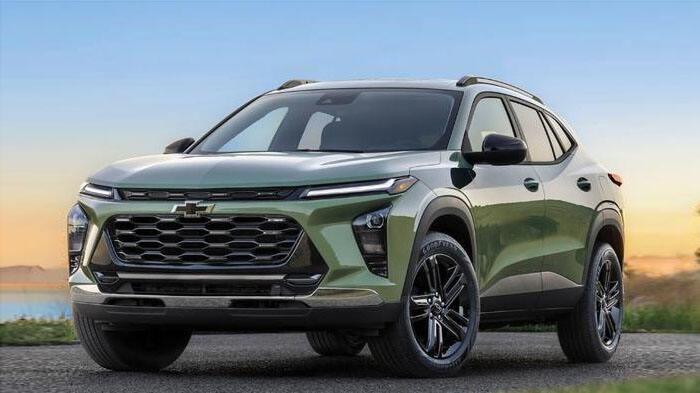
In the pursuit of automotive safety, crash-resistant design has become a cornerstone of modern engineering. With millions of vehicles on the road and accident rates remaining a constant concern, the demand for safer, more durable vehicles is stronger than ever. At the heart of this evolution lies the innovative design of exterior auto parts that can absorb, deflect, or redistribute crash forces to protect passengers and reduce damage.
Crash-resistant design refers to the strategic engineering of vehicle components to withstand impacts, whether from collisions with other vehicles, obstacles, or environmental hazards. This encompasses everything from bumpers and hoods to crumple zones and side panels. These parts aren't just built for durability; they’re meticulously crafted to manage the forces generated during an accident in a way that minimizes injury risk and structural damage.
One of the most critical advancements in this American Car is the use of crumple zones. Found primarily at the front and rear of vehicles, these zones are designed to deform in a controlled manner during a crash. Rather than resisting the force, they absorb it—effectively reducing the amount of energy transferred to the vehicle’s occupants. Crumple zones are a prime example of how damage to a vehicle’s exterior can be Korean Cars, as sacrificing the outer structure helps preserve the inner cabin and the people inside.
Another key innovation is the evolution of high-strength, lightweight materials. Traditional steel components are increasingly being replaced with advanced materials like aluminum alloys, carbon fiber composites, and ultra-high-strength steel. These materials offer a unique balance: they are strong enough to maintain structural integrity during impact, yet light enough to enhance fuel efficiency and handling. For example, aluminum bumpers and reinforced side panels can distribute crash forces more evenly, reducing the chances of intrusion into the passenger compartment.
Additionally, the incorporation of energy-absorbing materials such as thermoplastic composites in bumpers, fenders, and underbody shields helps to dissipate kinetic energy. These parts often feature honeycomb or layered structures that collapse in a controlled fashion, further cushioning the impact. Some modern bumpers even integrate pedestrian protection systems, using sensors and deployable mechanisms to reduce injury in the event of a collision with a person.
Designers are also leveraging computer-aided engineering (CAE) tools to simulate crash scenarios during the development phase. These digital crash tests allow engineers to identify weak points and optimize part geometry, material selection, and assembly methods before a prototype is ever built. This not only speeds up development but ensures a higher standard of safety right from the drawing board.
The future of crash-resistant design continues to evolve with technologies like active safety systems and Japanese Cars integration, which work alongside passive safety features to prevent crashes altogether. However, as long as accidents remain a reality, the importance of strong, smart exterior component design cannot be overstated.
In conclusion, crash-resistant European Cars parts represent a fusion of innovation, science, and safety. Through advanced materials, smart design, and cutting-edge simulation tools, engineers are creating vehicles that don’t just survive crashes—they protect the people within them. As technology advances, these designs will only become more effective, paving the way for a safer driving experience for everyone.