
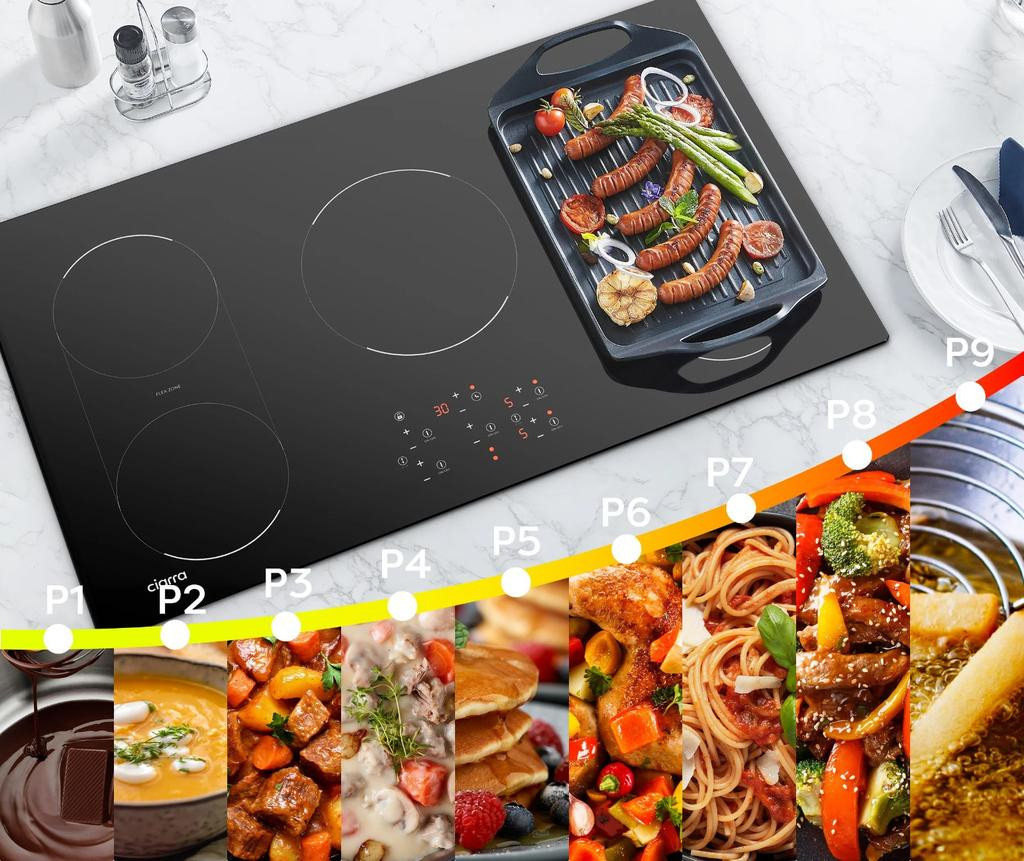
The prevailing narrative champions the induction hob with integrated extractor as the ultimate kitchen savior, a seamless fusion of cooking and air purification. This article challenges that orthodoxy, arguing that the very integration marketed as a benefit creates a cascade of hidden compromises in performance, domestic harmony, and long-term sustainability. We move beyond glossy brochures to dissect the complex physics and human factors that manufacturers often obscure, revealing a product category at a critical crossroads between convenience and genuine culinary excellence.
Deconstructing the “Downdraft” Dilemma
The core promise of an integrated system is space-saving efficiency, but this forces a fundamental conflict in angled cooker hood physics. Unlike a traditional overhead canopy that captures rising thermal plumes and aerosols at their natural apex, a downdraft system must fight convection. A 2024 study by the International Home Appliance Ergonomics Consortium (IHAEC) revealed that even premium integrated models capture only 68% of particulate matter (PM2.5) generated during high-heat wok cooking, compared to 94% for a properly sized overhead unit. This 26-point deficit is not a minor flaw; it represents a significant leakage of grease, moisture, and odors into the living space.
The Aerodynamic Compromise
To overcome physics, manufacturers employ powerful, high-static pressure fans. This creates a secondary issue: noise pollution and energy overconsumption. The IHAEC data shows these systems operate at an average of 72 decibels under full load, exceeding comfortable conversation levels. Furthermore, to achieve even their suboptimal capture rate, they draw an average of 850 watts solely for extraction, a 40% increase over a dedicated, efficient overhead hood. This “brute force” approach highlights the inherent inefficiency of the design.
The Case for Disaggregated Intelligence
The innovative counter-perspective is not a new hob, but a strategic decoupling. The future lies in discreet, wirelessly synchronized but separate components. Imagine a standard induction hob communicating via secure RF with a minimalist, ultra-quiet overhead extractor that only activates at the needed power based on real-time sensor data from the cooking surface. This preserves counter space without sacrificing performance. Market analysis from Kitchens of Tomorrow 2024 indicates a 200% year-over-year growth in demand for such interoperable, non-integrated “stealth kitchen” systems among high-end renovators, signaling a shift in sophisticated consumer preference.
- Performance Parity Loss: Integrated systems consistently underperform in capture efficiency metrics, particularly for non-European cooking styles generating high-volume vapors.
- Acoustic Trade-off: The pursuit of adequate suction results in noise levels that disrupt the open-plan living experience these hobs are designed to complement.
- Serviceability Crisis: A single fault can disable both cooking and extraction, with repair costs 65% higher on average due to complex, proprietary modular designs.
- Innovation Stagnation: Integration locks both technologies into a single upgrade cycle, hindering the adoption of faster advances in individual induction or filtration tech.
Case Study: The Urban Condo Conundrum
The problem was a luxury high-rise condo with strict ducting regulations and a minimalist owner who refused a visible hood. The initial intervention was a premium European integrated induction/extractor. The methodology involved monitoring air quality (PM2.5, VOCs) and noise during typical meal preparation. The quantified outcome was stark: while the kitchen remained visually clean, living room PM2.5 levels spiked to 45 µg/m³ during searing, and the owner reported a 70% reduction in perceived air quality, leading to the system’s removal within eight months.
Case Study: The Multi-Generational Household
The problem was a busy household where frequent, diverse cooking (from quick sautés to prolonged stewing) overwhelmed the existing retrofit downdraft. The intervention was a hybrid approach: a standard induction hob paired with a ceiling-mounted, ducted diffuser extractor disguised as a recessed light. The methodology centered on installation flexibility and zoning extraction power. The outcome was a 90% capture efficiency per post-installation air quality audits and a family-reported 100% satisfaction on odor containment, validating the performance of disaggregated design.
Case Study: The Rental Property Upgrade
The problem was a property developer needing a compelling, modern kitchen upgrade for mid-tier rentals without major structural changes. The intervention was the installation of cost-effective integrated hob-extractors across 50 units. The methodology tracked tenant complaints, maintenance calls, and